
Which Martial Art Is Best for Self Defense a Complete Guide with Ratings & Tips
Which martial art is best for self defense depends on your ability to train realistically under pressure and adapt to common fight scenarios. Martial arts like Brazilian Jiu-Jitsu, wrestling, and Sambo offer practical techniques for controlling an attacker, while striking arts like Jeet Kune Do and Kyokushin Karate prepare you to respond with effective punches and kicks. Start with an art that emphasizes live sparring to build confidence and skill in chaotic situations.
Key Takeaways
- Choose a martial art that incorporates live sparring to simulate real-life attack intensity and chaos.
- Striking arts focus on quick, powerful attacks, while grappling arts teach control and defense on the ground.
- Consistent training over 1, 2 years develops reliable self-defense skills for most common street confrontations.
- Wrestling’s short, explosive matches mimic real defense timings better than longer-duration sports.
- Pressure testing skills in realistic scenarios increases your confidence and reaction speed during an attack.
- Selecting a martial art that fits your personal goals and physical abilities ensures better long-term commitment.
The Most Effective Martial Arts for Real Self-Defense
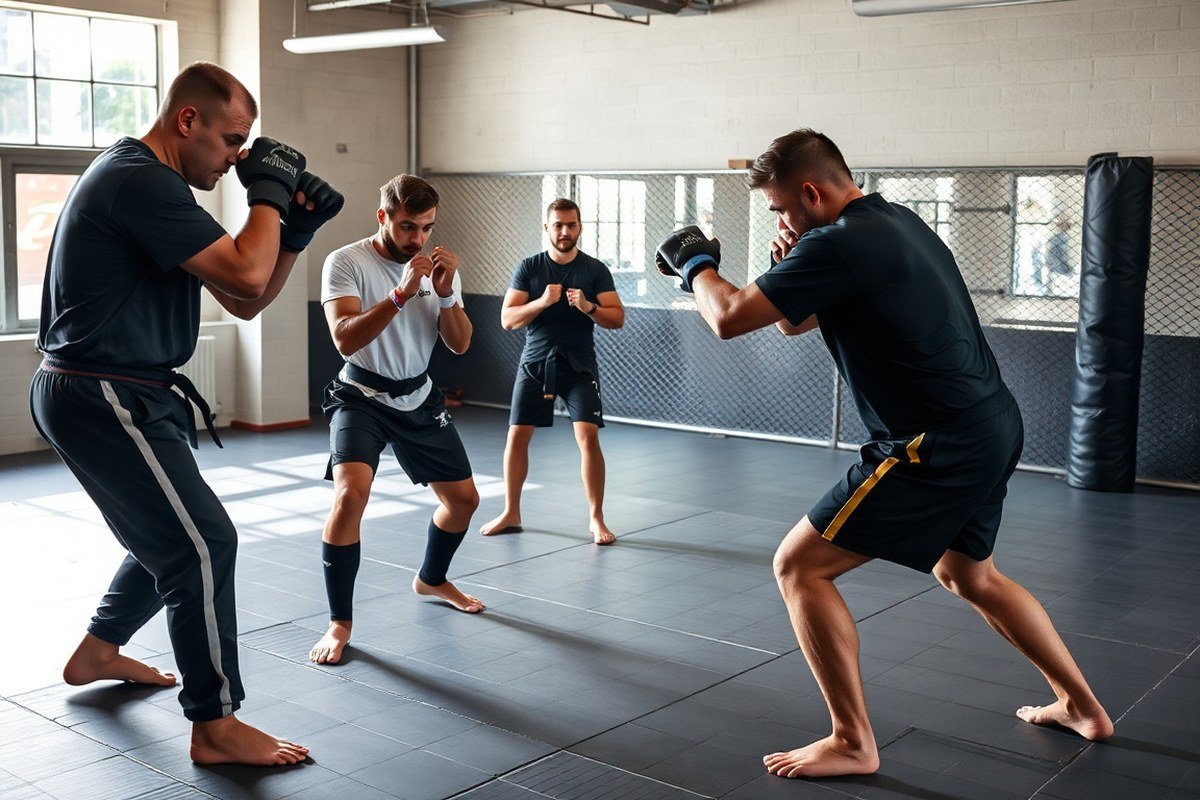
Mixed Martial Arts (MMA) ranks highest for practical self-defense because it combines striking, grappling, and ground fighting skills. Its complete approach covers punches, kicks, takedowns, and submissions, preparing you for unpredictable encounters. MMA training typically includes Brazilian Jiu-Jitsu (BJJ) for ground control, Muay Thai or Boxing for striking, and Wrestling for clinch work and takedowns, making it highly effective in real-world situations. A typical beginner-friendly MMA gym costs around $100 to $150 per month, and within 6 to 12 months, you can gain functional self-defense skills.
Krav Maga is another top choice, designed specifically for practical street defense. It focuses on quick, aggressive techniques to neutralize threats, including strikes and basic grappling, often with weapon defense drills. Krav Maga is beginner-friendly and emphasizes situational awareness, which matters for survival on the street. Training costs vary but usually range from $70 to $120 monthly.
Brazilian Jiu-Jitsu (BJJ) excels at ground defense, making it ideal if you face larger attackers or end up grappling on the ground. BJJ allows a smaller person to control or submit a bigger opponent by mastering use and submissions. Although BJJ’s striking elements are limited, pairing it with boxing or Muay Thai fills this gap. BJJ tends to be beginner-friendly and can take about a year to acquire effective skills.
Boxing offers excellent striking and footwork, critical for maintaining distance and defending against punches. It’s very beginner-friendly and builds confidence quickly. Boxing is less effective for grappling but can be combined with other arts. Monthly training fees usually range from $50 to $100.
Wrestling, Muay Thai, and Judo also score highly. Wrestling provides takedown control and clinch fighting, Muay Thai delivers powerful strikes and effective knee and elbow techniques, and Judo focuses on throws and use to neutralize an attacker. These arts are highly effective but may require supplementary training to cover gaps. Beginner friendliness varies; for example, Muay Thai might be tougher for newcomers compared to Judo.
| Martial Art | Striking | Grappling | Beginner Friendly | Real-World Defense |
|---|---|---|---|---|
| MMA | ⭐⭐⭐⭐⭐ | ⭐⭐⭐⭐⭐ | ⭐⭐⭐ | ⭐⭐⭐⭐⭐ |
| Krav Maga | ⭐⭐⭐⭐ | ⭐⭐⭐ | ⭐⭐⭐⭐ | ⭐⭐⭐⭐⭐ |
| Brazilian Jiu-Jitsu | ⭐ | ⭐⭐⭐⭐⭐ | ⭐⭐⭐⭐ | ⭐⭐⭐⭐ |
| Boxing | ⭐⭐⭐⭐⭐ | ⭐ | ⭐⭐⭐⭐⭐ | ⭐⭐⭐⭐ |
| Muay Thai | ⭐⭐⭐⭐⭐ | ⭐⭐ | ⭐⭐⭐ | ⭐⭐⭐⭐ |
| Wrestling | ⭐⭐ | ⭐⭐⭐⭐⭐ | ⭐⭐⭐ | ⭐⭐⭐⭐ |
| Judo | ⭐ | ⭐⭐⭐⭐ | ⭐⭐⭐ | ⭐⭐⭐ |
| Kickboxing | ⭐⭐⭐⭐ | ⭐ | ⭐⭐⭐ | ⭐⭐⭐ |
How Training Time Affects Your Self-Defense Abilities
Within the first 3 months of training, you typically learn Basic strikes, escapes, and how to fall safely. These foundational skills help you avoid injury and respond to simple aggression. Early on, you focus on drills that build awareness and confidence, which are important for your safety. Training at this stage usually involves learning key techniques to handle common threats like grabs or pushes. You might not feel ready to face multiple or aggressive attackers yet, but you’ll have practical tools to defend yourself in straightforward situations.
By about 12 months, your coordination, timing, and understanding of distance improve significantly. You gain better control over your reactions and start learning how to apply techniques under pressure, often through controlled sparring or scenario-based training. This stage often includes grappling or clinch work and developing counters against varied attacks. You’re more equipped to handle different types of attackers, including those who might use weapons or try unexpected moves. Consistent practice builds not only physical skill but also the mental readiness to act calmly in tense moments.
After 3 years of steady training, your self-defense abilities become more refined and adaptive. You likely have a broad range of techniques, including striking, grappling, and weapon defense, depending on your martial art. At this point, you can handle multiple attackers or unpredictable situations with greater confidence and effectiveness. Long-term training also deepens your situational awareness and decision-making skills, which are just as important as physical techniques. The journey requires regular classes, typically at least 2 times per week, and practicing outside of class to reach this level. Skipping pressure testing or realistic practice can stunt your progress and confidence in real encounters.
Choosing a Martial Art Based on Your Situation and Goals
Choosing the right martial art depends on your personal goals, body type, fitness level, and typical threat scenarios you expect to face. Smaller or less athletic individuals should lean toward arts emphasizing technique over brute strength, such as Brazilian Jiu-Jitsu or Judo. These focus on use and positioning to control or submit opponents, making them well-suited for people with less raw power. For women and older adults, a combination of practical striking and grappling is best, styles like Krav Maga teach quick, efficient self-defense moves and situational awareness without requiring peak athleticism.
Deciding between striking and grappling depends on your preferences and common situations. Striking arts like Muay Thai and Karate excel in standing altercations and multiple attacker scenarios, but they offer limited ground defense. Grappling arts handle ground defense well but are less effective against multiple attackers or weapon threats. For practical self-defense, mixing both striking and grappling skills offers better coverage.
Use this decision checklist to guide your martial art choice: First, identify your primary goal, pure defense, fitness, or a mix. Then consider your fitness and body type: high-impact dynamic arts may not suit older or less athletic individuals. Third, reflect on your typical threat: street encounters involving strikes call for striking arts; ground threats or close clinches suggest grappling. Lastly, evaluate instructor availability and the training environment, as quality teaching matters most.
Training intensity and consistency also shape results. Arts like Brazilian Jiu-Jitsu, practiced with full effort during simulated attacks, prepare you better for chaotic real-life encounters. However, some arts prioritize tradition or sport competition, which may not directly translate to practical self-defense. The best approach fits your lifestyle and builds skills gradually, avoiding injuries or burnout.
How Striking and Grappling Arts Differ for Self-Defense
Striking arts like Boxing and Muay Thai focus on delivering powerful punches, kicks, elbows, and knees from a standing position. They target quick, precise strikes that can incapacitate an attacker through pain or distraction. Practicing striking builds strong footwork, timing, and cardiovascular fitness. However, these arts usually do not cover ground fighting or extensive grappling, which can be a drawback if a conflict moves to the ground. For example, Muay Thai fighters do not train takedown defense, meaning if an assailant grabs or trips you, you may struggle to stay standing or escape quickly.
Grappling arts such as Brazilian Jiu-Jitsu (BJJ) and Judo emphasize controlling an opponent through holds, joint locks, chokes, and throws. Their techniques excel when fights go to the ground, where most real-world altercations often end. BJJ teaches submissions that allow even smaller practitioners to neutralize larger attackers by controlling positioning and applying use. Judo specializes in using an attacker’s balance and momentum against them, ideal for close-quarters self-defense. These arts focus less on striking but offer practical ways to subdue attackers without relying on brute force.
In real-life situations, BJJ handles ground fighting better because it trains you to control, defend, and submit opponents once the fight is on the ground. This skill can prevent serious injury and give you opportunities to escape. Striking may give you an advantage initially, but without grappling skills, you might be vulnerable if taken down. Combining striking and grappling creates a more complete defense system. For example, training with Muay Thai for stand-up strikes and BJJ for ground control covers many possible scenarios. Each requires dedicated practice, striking develops fast reflexes and powerful hits, whereas grappling demands patience, balance, and technique in close contact.
Maximizing Your Training: Pressure Testing and Realistic Practice
Pressure testing plays a key role in preparing you for self-defense. It trains your body and mind to respond effectively under stress, intensity, and unpredictability. Training solely through drills and forms doesn’t replicate the chaos of real encounters. Pressure testing exposes you to live resistance and surprises, helping build reflexes and timing.
Sparring is one of the best ways to develop confidence and practical skills. Through controlled but live exchanges, you practice applying techniques against a moving, resisting opponent. This dynamic environment forces you to think fast and adjust your actions, which is critical when facing an actual attacker. Beyond physical skills, sparring reduces fear by familiarizing you with close-contact conflict.
The most realistic training incorporates scenario drills designed to mimic real attack conditions. These include situations like defending in tight spaces, dealing with multiple attackers, or reacting to surprise strikes. Training at a higher intensity than usual, with improve heart rates and adrenaline, further simulates the stress of an actual confrontation.
- Use sparring sessions focused on defense rather than competition
- Practice scenario drills mimicking surprise attacks or low-light conditions
- Train with an improve heart rate by adding conditioning before drills
- Include multiple attacker simulations with partners rotating roles
- Apply strikes and defenses under time pressure for quick decision-making
- Review each training session to identify improvements and mistakes
- Keep safety gear on to allow harder contact without injury risk
Realistic training demands time, a good instructor, and proper safety measures. The payoff is practical skills that perform better when you need them. Neglecting pressure testing may leave you unprepared for the physical and mental intensity of real self-defense situations.
Avoiding Common Myths and Mistakes in Self-Defense Martial Arts
There is no single martial art that is unbeatable in every self-defense situation. Each style has strengths and limitations, making it important to understand that real fights are unpredictable and rarely follow the choreographed sequences seen in movies or competitions. These portrayals often emphasize flashy moves or point-scoring techniques that do not translate well to actual self-defense scenarios.
Many beginners believe that simply learning one martial art guarantees safety, but effectiveness depends heavily on consistent practice and real-world application. Common mistakes include training only in a controlled environment, neglecting realistic pressure testing, and ignoring the importance of situational awareness. Without practicing under stress or with unpredictable partners, skills may not hold up when faced with an aggressive attacker.
- Myth: One martial art is best for every situation, Reality: Combining skills or choosing a versatile style helps adapt to different threats.
- Myth: Movie or sport techniques will work the same in self-defense, Reality: Focus on simple, effective moves tested under pressure.
- Mistake: Training inconsistently, Solution: Commit to regular, ongoing practice to build reflexes and confidence.
- Mistake: Avoiding sparring or realistic drills, Solution: Include controlled sparring and scenario-based training to simulate real attacks.
- Mistake: Ignoring mindset and awareness, Solution: Develop mental readiness and learn to avoid or de-escalate conflicts when possible.
Addressing these myths and mistakes takes time but leads to clear improvements in your ability to defend yourself. Consistent training, under the guidance of experienced instructors, in a supportive environment is key to developing skills that hold up beyond the gym or dojo. Practical self-defense is as much about preparation and mindset as it is about physical technique.
Safety and Injury Prevention in Self-Defense Training
Training safely in self-defense martial arts means using the right protective gear and following rules to minimize injury risks. Wearing equipment like mouthguards, headgear, padded gloves, and shin guards can protect vulnerable areas during sparring or drills. The cost of basic protective gear ranges from $20 to $100 per item, depending on quality and brand, but investing in these keeps you training longer without setbacks from injuries.
Avoiding common injuries involves warming up properly, drilling techniques slowly before increasing speed, and respecting your limits. Controlled training environments with clear signals for stopping or adjusting intensity help prevent accidents. As you gain experience, pay attention to your body and stop if you feel sharp pain, to avoid worsening a possible injury.
- Wear certified protective gear appropriate for your martial art
- Begin sessions with 10-15 minutes of dynamic warm-up
- Practice techniques with control and gradually increase intensity
- Train under qualified instructors who prioritize safety
- Use mats or padded floors to cushion falls
- Hydrate and rest adequately between training rounds
- Communicate openly with training partners about limits and concerns
A professional such as a physical therapist or doctor should be consulted if you experience persistent pain, swelling, or reduced joint movement lasting more than a day. Immediate evaluation is needed for suspected fractures, dislocations, or head injuries like concussions. Early treatment helps avoid complications and gets you safely back to training.
How to Maintain and Improve Your Self-Defense Skills Long-Term
Training consistently is key to keeping your self-defense skills sharp. Aim for at least two to three sessions per week, adjusting based on your schedule and fitness level. For ongoing improvement, blend your primary martial art practice with cross-training like cardio, strength exercises, and flexibility work. This helps maintain overall fitness and makes techniques more effective in real situations.
As your body changes with age or lifestyle, it’s important to modify training intensity. For example, Brazilian Jiu-Jitsu allows you to control sparring pressure and focus more on technique than force, making it a practical option across different fitness levels. Adapting your routines keeps training safe and sustainable while still challenging your skills.
- Schedule regular practice sessions, ideally 2-3 times weekly
- Incorporate cardio workouts like running or cycling to boost endurance
- Add strength training to improve power and injury resistance
- Stretch or do yoga to keep joints and muscles flexible
- Rotate drills to avoid skill plateau and build different reflexes
- Periodically practice realistic scenarios or pressure testing
- Track progress and adjust training based on physical changes or goals
Long-term skill maintenance takes dedication but costs little beyond your time and effort. Avoid gaps longer than a few weeks, as skills and fitness decline quickly without practice. Regular review and adaptation ensure your techniques stay practical and effective against evolving threats or personal circumstances.
Your First 30 Days: A Quick-Start Plan
Begin your self-defense journey with focused steps to build fundamental skills and confidence. Track your progress by recognizing improvements in both technique and situational awareness.
- Before you start: Research nearby martial arts schools offering self-defense classes that match your goals. Confirm the style includes realistic practice and pressure testing.
- Week 1: Attend your first beginner class focusing on foundational strikes, footwork, and awareness drills. You’ll know it’s effective when you can perform basic movements without hesitation.
- Week 2: Practice learning simple defensive techniques against grabs or holds. Test these lightly with a partner or instructor to build comfort under pressure.
- Week 3: Increase your focus on reaction time by training with randomized attacks or scenarios. Success looks like faster responses and fewer mistakes.
- Week 4: Attend at least one class working on grappling or ground defense if your style includes it. Assess your ability to control or escape holds on the ground.
- After 1 month: Review your training notes and ask your instructor about your progress. Identify one skill to improve further based on realistic sparring or drills.
Frequently Asked Questions
What Martial Art Offers the Quickest Practical Self-Defense Skills?
Krav Maga offers quick practical self-defense techniques focused on real-world threats. It emphasizes neutralizing attackers efficiently with strikes, grappling, and weapon defense to prepare you for unpredictable situations.
Is Brazilian Jiu-Jitsu Effective for Self-Defense Against Multiple Attackers?
Brazilian Jiu-Jitsu excels in ground defense but can be risky against multiple attackers. Practicing awareness and combining it with striking arts boosts overall safety in such situations.
How Does MMA Prepare You for Real-Life Confrontations?
MMA provides a mix of striking and grappling skills useful in real fights. Live sparring and competitive training mimic chaotic conditions, improving your ability to handle aggression under pressure.
Can Traditional Martial Arts Like Judo Be Used for Modern Self-Defense?
Yes, Judo’s throws and use can neutralize threats effectively, especially if you use pressure-testing in training. Adaptation to real scenarios makes traditional techniques more practical.
Is Striking or Grappling More Important for Someone New to Self-Defense?
Striking is easier for beginners to learn fast, but grappling skills grow your control and defense capabilities. Combining both offers a balanced approach tailored to your comfort and goals.
Key Points to Remember
Choosing the best martial art for self-defense means focusing on practical skills suited to your needs and training realistically. Prioritize consistent practice with partners who challenge you in controlled settings. Take your first class soon to experience how these arts train you to stay safe and confident in real situations.