What Is Still Life Art? A Complete Guide to Its History, Styles & Meaning
What is still life art? It is a genre that focuses on painting or arranging inanimate objects, such as food, flowers, or household items. These artworks highlight everyday items to explore composition, texture, and symbolism in a controlled setting. Starting by observing simple object groups can help you understand the balance and detail important to still life art.
Key Takeaways
- Still life art centers on non-living objects carefully arranged to highlight form, light, and meaning.
- Its origins trace back to ancient Egyptian and Roman art but gained independence as a genre in 16th-century Renaissance Europe.
- 17th-century Dutch painters popularized still life with detailed realism and symbolic content.
- Vanitas still life uses objects like skulls and wilting flowers to remind viewers of life’s transience.
- Artists organize objects based on shape, color, and texture contrasts to create visual harmony.
- Contemporary still life includes photography, sculpture, and digital media, expanding traditional concepts.
What Exactly Is Still Life Art?
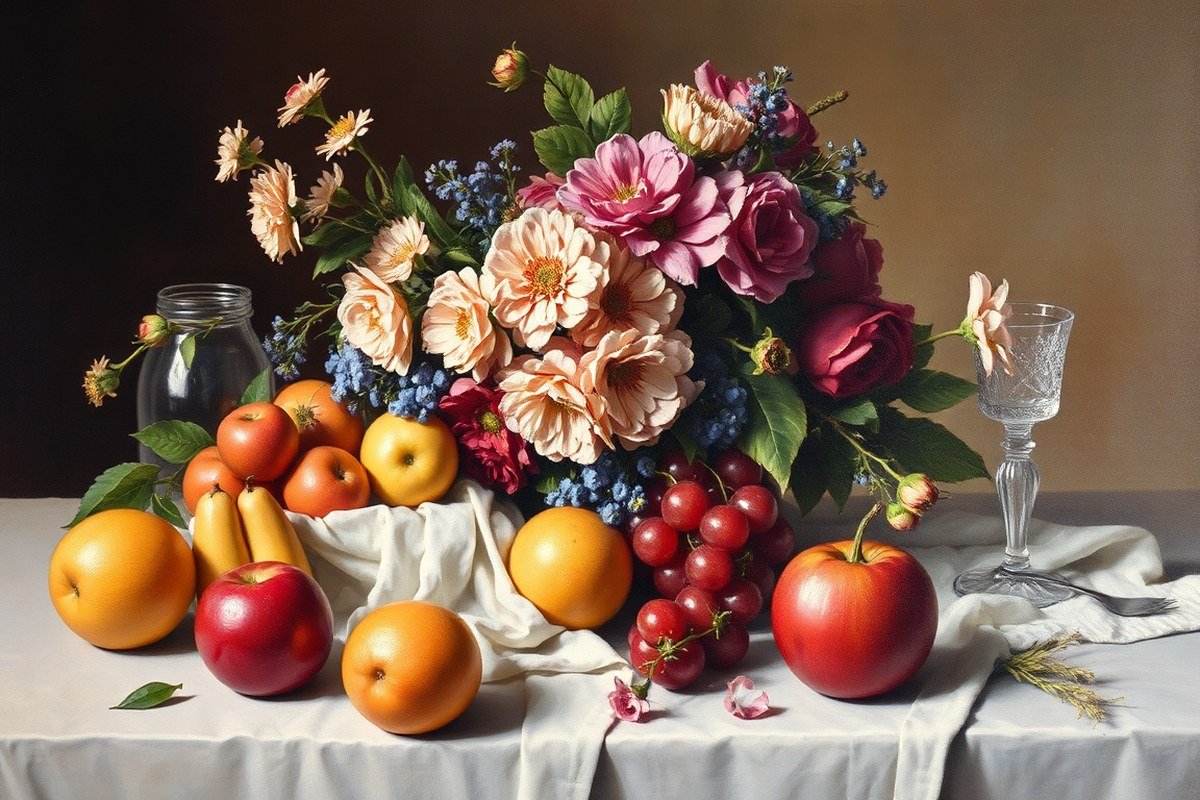
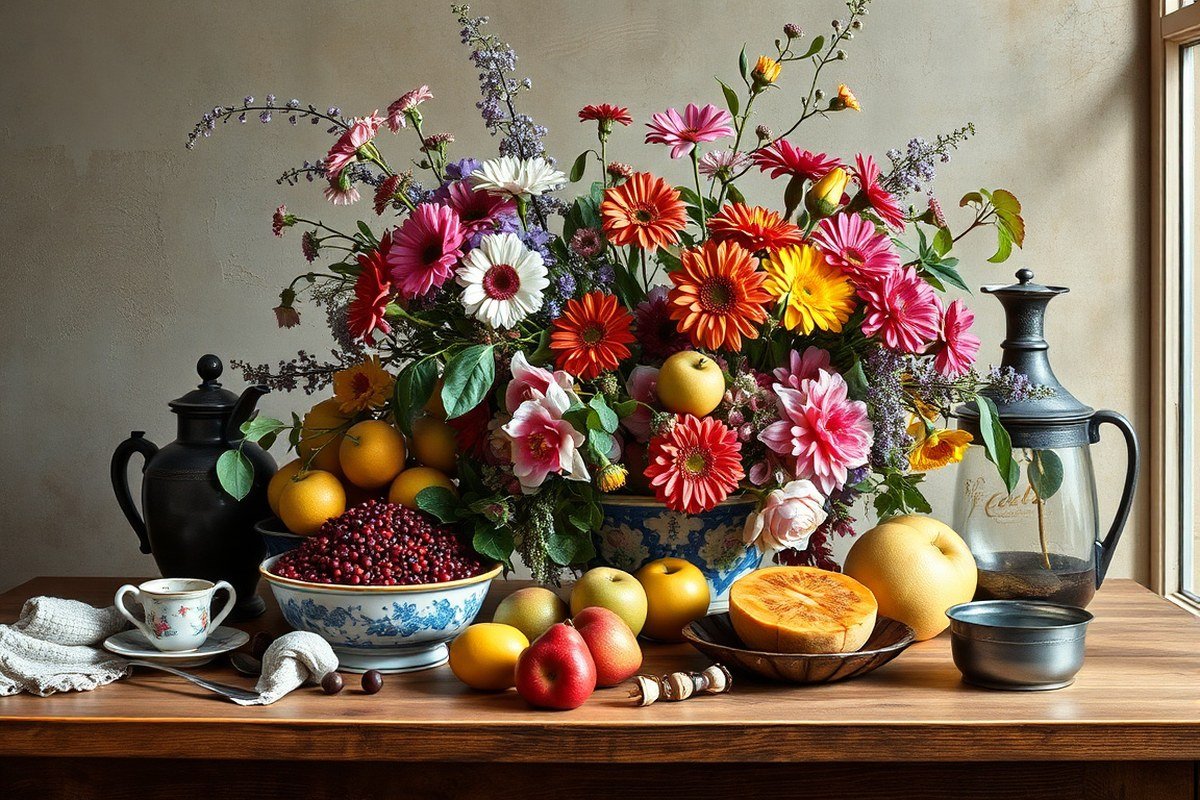
Still life art focuses on creating images of inanimate objects arranged in a deliberate composition. These objects can be natural, such as fruit, flowers, dead animals, shells, or rocks, or man-made items like vases, books, jewelry, coins, and utensils. The key feature that qualifies an artwork as a still life is that its main subject consists of objects rather than people or scenes with action. Unlike portrait art, which centers on human subjects, or landscape art, which depicts outdoor environments, still life presents collections of objects isolated from motion and narrative.
This genre first gained recognition as a distinct style during the Renaissance but was ranked last in the traditional seventeenth-century French Academy’s hierarchy of art genres, below history painting, portraiture, genre scenes, and landscapes. Still life invites close study of texture, form, light, and color through everyday or symbolic objects.
To distinguish still life from other genres, check whether the artwork shows only non-living items arranged purposefully without human or animal figures or expansive outdoor views. Common subjects include fresh or dried fruits, flowers, dead game, glassware, cookware, or personal objects like jewelry. Some variations focus on symbolism, such as the 17th-century Dutch vanitas still life, which uses items like skulls, wilting flowers, or extinguished candles to reflect on mortality and the fleeting nature of life.
Artists creating still life works pay attention to composition, light, shadow, and texture to give these objects presence and meaning. The simplicity of the subject matter allows you to focus on technique and the subtle details that bring the scene to life. You don’t need fancy supplies to start, basic paints, pencils, or charcoal and a small collection of objects on a table can serve as your still life studio. The genre’s versatility makes it accessible for beginners and challenging for professionals exploring new artistic expressions.
How Did Still Life Art Develop Through History?
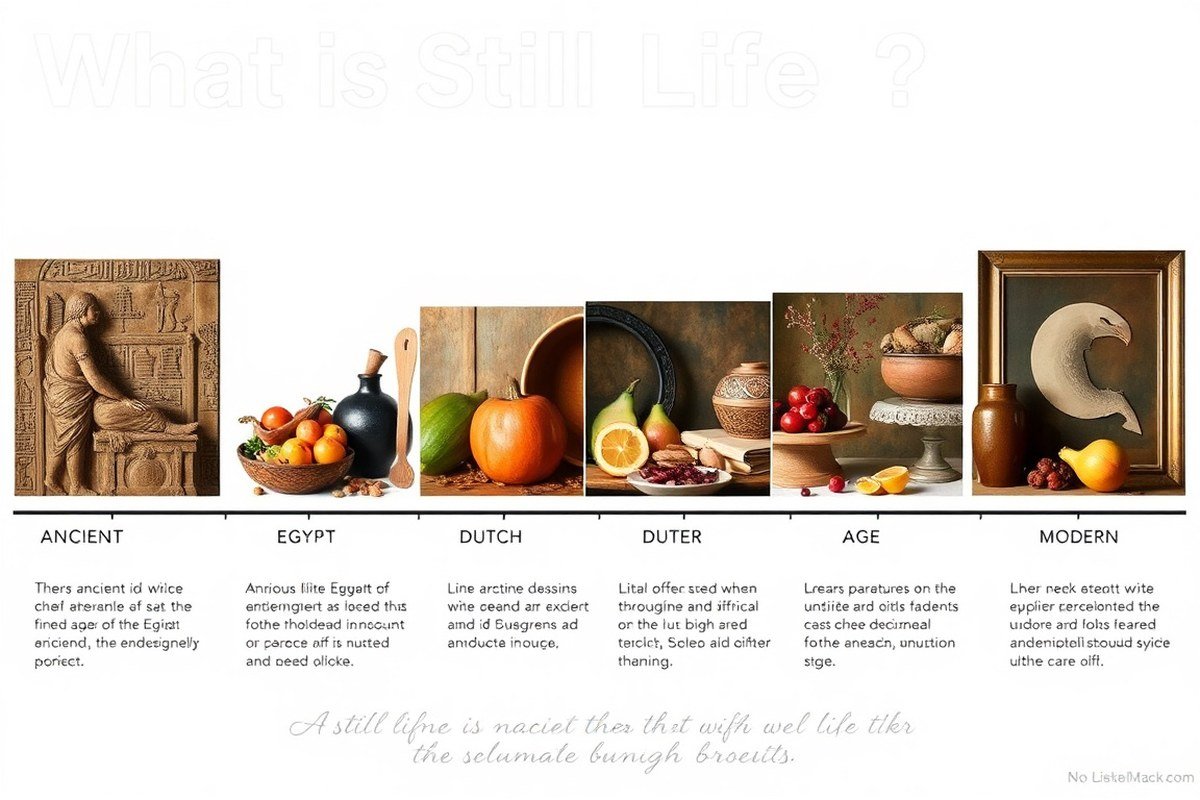
Still life art originated in ancient civilizations where artists depicted everyday objects, but it remained a subtle part of larger works. Its distinct status as a separate genre only took shape during the Renaissance, around the 15th century. Artists like Jan van Eyck integrated detailed still life elements into religious scenes, signaling a shift towards appreciating the beauty and symbolism in common objects. This period laid the groundwork for still life to become more than background decoration.
The 17th century marked a peak for still life painting in Europe, particularly during the Dutch Golden Age. Dutch middle-class patrons drove the genre’s rise in popularity. Artists like Willem Claesz Heda and Pieter Claesz specialized in realistic, detailed scenes featuring food, flowers, and everyday objects. Their paintings often included symbolic elements beneath their visual appeal. Careful use of light, texture, and organization set still life apart as a valued art form even among academic painters focused more on history and portrait art.
In modern times, still life has expanded beyond painting into photography, sculpture, installation, and digital art. Artists like Paul Cézanne used simple still life setups as formal experiments, influencing movements like Cubism. Contemporary creators explore digital tools and AI to produce hyper-real or entirely new objects, continuing the genre’s evolution. This ongoing transformation reflects still life’s unique capacity for both technical exercise and symbolic storytelling throughout art history.
What Are Common Types and Symbolism in Still Life?
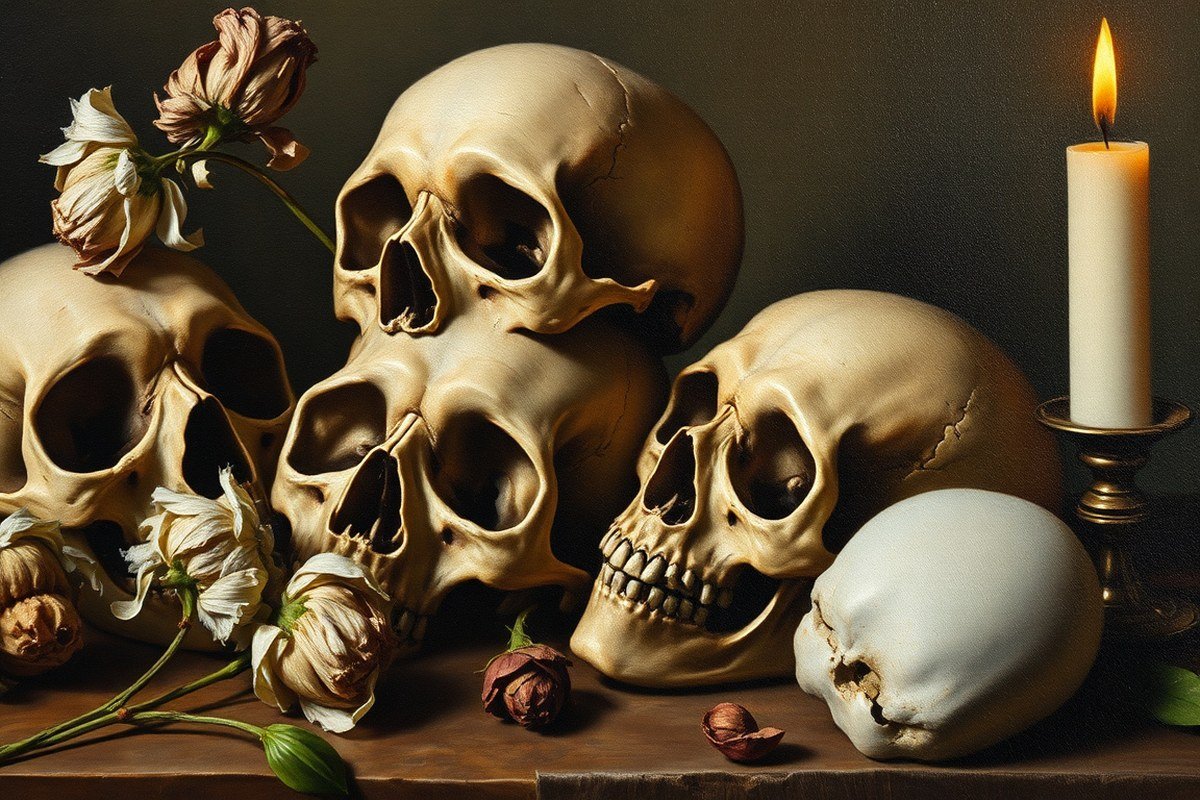
Still life art encompasses a few distinct types that reflect different themes and cultural contexts. Vanitas still lifes emphasize the fleeting nature of life and the certainty of death. They commonly include symbols like skulls, extinguished candles, wilting flowers, and cracked vessels to remind you of mortality and the passage of time. Pronk still lifes focus on lavish displays of luxury and abundance, featuring fine glassware, precious metals, and exotic fruits to highlight wealth and material success. Market or kitchen still lifes show everyday produce such as fruits, vegetables, and game, celebrating daily life and nature’s bounty.
Comparing these types helps identify the intent behind a still life. Vanitas uses stark, often somber symbolism urging reflection on life’s impermanence. Pronk celebrates opulence but may also contain subtle warnings through delicate or spoiled objects. Market still lifes tend to be more neutral or joyous, focusing on abundance without moralizing.
Symbolism plays a key role in conveying deeper meanings. Common symbols include clocks, bubbles, or books representing time’s passage or knowledge; wilting flowers and broken vessels signaling decay and fragility; skulls marking mortality; and insects or reptiles evoking danger or corruption. Objects chosen and their condition often align with the cultural values or religious beliefs of the period. For example, 17th-century Dutch Vanitas paintings reflect Protestant ideas about vanity and human humility.
To interpret symbolism in still life, use this checklist: identify each object, consider its state (fresh, wilting, broken), note placement and interaction with other items, and research common meanings in the artwork’s historical era. Remember, some luxury items appear simply to show artistry and skill, not always as moral commentary.
Understanding the types and symbolism in still life enriches your appreciation of these paintings. It reveals not only the artist’s technical mastery but also complex messages about life, death, and time shaped by their cultural setting. Recognizing these details transforms a simple arrangement of objects into a meaningful and thought-provoking work of art.
How Do Artists Create and Arrange Still Life Compositions?
Artists begin by selecting objects that offer both visual interest and thematic coherence, often choosing items like fruit, glassware, books, or musical instruments. These inanimate objects become the focus, arranged to create balance and draw the viewer’s eye to a central point or focal area. The process usually starts with sketching rough layouts to explore different compositions before settling on a final setup.
Lighting plays a important role in shaping the mood and clarity of the scene. Natural light provides soft gradients and true color, which suit traditional still life painting during daylight hours. For controlled environments, artists use a single light source at an angle between 30 and 45 degrees to emphasize form and texture, creating shadows that add depth and volume.
- Choose objects with varied shapes, textures, and colors to maintain viewer interest
- Position the main object off-center for dynamic balance using the rule of thirds
- Use a plain or subtle background to avoid distracting from the objects
- Arrange objects so their edges slightly overlap, increasing depth and cohesiveness
- Adjust the distance between items to guide the viewer’s gaze smoothly across the composition
Common materials include oil, acrylic, or watercolor paints, each offering different drying times and effects. Oil paints, for example, dry slowly, allowing artists to blend colors directly on the canvas and capture nuanced shadows and highlights, which is essential for realistic textures. For detailed lines or fine textures, printmaking techniques like etching or lithography can be used. Digital tools such as tablets and painting apps also provide flexible options for creating or arranging still life scenes, particularly helpful for experimenting with lighting and arrangement before committing to physical materials.
How Can You Analyze and Interpret Still Life Paintings?
Analyzing a still life painting means looking closely at its elements, how they’re arranged, and what they might represent. Start by noting the objects included, are they everyday items, natural objects, or symbols with historical meanings? Observe the use of color, light, and texture to understand the mood the artist creates. Consider the perspective and how the objects relate spatially. These details give you clues about what the artist intended to communicate beyond just showing objects.
Symbols in still life often carry layered meanings. For example, a skull might signify mortality, while fruit can represent abundance or decay depending on its freshness. Recognizing such symbols requires some knowledge of cultural and historical contexts. Also, understand that your personal experience and cultural background shape how you interpret these paintings. What seems obvious to one viewer might be subtle or meaningless to another.
- Check the objects’ traditional symbolic meanings before guessing interpretations
- Note the composition’s balance and focus points to understand what the artist emphasized
- Look for signs of artist’s technique like brushwork and lighting that guide your eye
- Consider the time and place of the painting to understand relevant cultural symbols
- Remember your perspective influences what you see; be open to multiple interpretations
- Avoid reading too much into random details that have no clear symbolic value
- Don’t ignore the artist’s style, which can exaggerate or abstract objects for emotional effect
Common mistakes include assuming all objects have symbolic meaning or interpreting symbols without considering the artist’s cultural context. Another pitfall is overlooking technical aspects like perspective and light, which shape how the painting communicates. To avoid this, follow a step-by-step checklist: identify objects, research their common symbolism, analyze the composition and technique, then think about historical and personal context before forming your interpretation. Taking your time and being methodical leads to richer understanding and appreciation of the artwork.
Your First Steps to Exploring Still Life Art
Get started with still life art by exploring and practicing key elements step by step. This plan helps you understand, observe, and create with confidence.
- Day 1: Choose a simple still life setup with three to five objects. Arrange them based on size and shape to create balance. You’ll know it works when the arrangement feels stable and interesting to look at.
- Week 1: Study 3 to 5 classic still life paintings from different periods. Note the use of light, shadow, and symbolism. Recognize it’s effective when you can describe the artists’ choices and potential meanings.
- Week 2: Practice sketching your chosen still life from different angles. Focus on proportions and perspective. It’s successful when your sketches show improved accuracy and depth.
- Week 3: Experiment with color by painting your still life using one or two different color schemes. Assess which colors convey mood or symbolism better. You’ll see progress when your colors create a clear visual effect.
- After 1 Month: Analyze your finished still life by writing a short interpretation. Include composition, symbolism, and technique. You’ve succeeded when you can explain your artistic choices and viewers’ possible reactions.
Frequently Asked Questions
What Materials Are Typically Used for Still Life Art?
Still life artists often use oil paints, acrylics, or watercolors combined with canvas or paper. Drawing materials like charcoal and graphite are also popular. These mediums allow precise detail and texture important for depicting inanimate objects realistically.
How Does Still Life Art Help Beginner Painters?
Still life painting helps beginners practice observing shapes, shadows, and color mixing in a controlled setup. It strengthens skills in composition and lighting without the challenges of capturing movement or portraits. This makes it a fundamental exercise in many art schools.
Can Still Life Art Include Artificial or Digital Objects?
Yes, still life art can portray artificial or digital objects as long as the subject is inanimate and arranged deliberately. The genre evolved and today includes modern objects like electronics, improving contemporary interpretation.
What Role Does Perspective Play in Still Life Compositions?
Perspective helps create a realistic spatial relationship among the objects in still life paintings. Skillful use of perspective makes flat surfaces appear three-dimensional, improving the viewer’s sense of depth and realism.
Why Are Vanitas Paintings Considered a Type of Still Life?
Vanitas paintings are still life artworks focused on symbolic objects that remind us of mortality and the fleeting nature of life. Common in 17th-century Dutch art, they use items like skulls and wilting flowers to convey deeper philosophical meanings.
The Bottom Line
Still life art offers a way to observe everyday objects with focused attention on form, light, and meaning. Trying the steps above will sharpen your skills and deepen your appreciation as you create and study these works. Start by setting up your first still life and see how your view on simple subjects changes through careful observation.