
How to Describe Art: A Complete Guide with Practical Steps and Examples
Knowing how to describe art clearly helps others understand and appreciate its value. Start by observing the visual details first, then share your personal reaction to the work. Beginning with your immediate impression or feeling often makes the description feel authentic and engaging.
Key Takeaways
- Begin your description by noting what catches your eye most in the artwork’s composition or color.
- Use specific terms like “bold lines,” “muted palette,” or “dynamic form” to accurately depict visual features.
- Mention the type of artwork, such as “original painting” or “limited edition print,” to clarify its edition status.
- Describe the emotions the artwork evokes in you to connect readers with your personal response.
- Include the artist’s background or historical context when relevant to deepen understanding of meaning.
- Avoid vague words like “nice” or “interesting”; choose descriptive adjectives that paint a clear picture.
How to Begin Describing a Piece of Art Effectively

Begin by observing the artwork closely. Take a few minutes to look at the piece without rushing. Note the most striking visual features like color, shape, and composition. Describe these facts straightforwardly, for example: “The painting uses bold reds and swirling lines that dominate the canvas.” Starting with what you see sets a clear foundation. It also creates space for your personal reaction without letting feelings overwhelm your description.
Blend observation with your initial emotional response. After noting visual facts, reflect briefly on how the piece makes you feel. You might say, “The intense reds evoke a sense of urgency and passion.” This combination helps readers understand both the artwork’s appearance and its impact. Keep personal impressions genuine but concise, around one to two sentences following your factual notes.
Balance takes practice and a simple template can help. For instance, you could begin with, “At first glance, I notice [visual details]. This makes me feel [personal reaction].” Limiting your introductory description to about 100 to 150 words works well for essays, presentations, or exam answers. Longer descriptions risk losing clarity, while shorter ones may lack depth.
Adapt your approach depending on context. For exams or classroom settings, focus on clear, specific observations paired with honest feelings. If you’re writing about your own art, emphasize how the piece connects to your creative process or growth, without over-explaining the meaning. Avoid jumping to conclusions or making assumptions beyond what you personally observe and feel.
What can go wrong is starting with vague statements or only expressing opinions without backing them up with visuals. Without an observational base, your description might come across as ungrounded. Conversely, purely technical descriptions without any personal touch can feel flat. Striking a balanced first impression invites readers into your view of the artwork and sets a thoughtful tone for further exploration.
Key Elements and Words to Describe Visual Features

When describing visual features of art, using precise vocabulary sharpens your observations and communicates the artwork’s qualities clearly. For Color, words like vibrant, muted, saturated, or pastel express intensity and mood. You can describe contrasts as stark or subtle, and note if the color palette is warm, cool, or monochromatic.
Lines can be described as bold, delicate, jagged, flowing, or curved, depending on their appearance and energy. These terms help convey movement, tension, or calm within the artwork. Shapes may be geometric (like squares or circles), organic (freeform), abstract, or symmetrical, each invoking different visual effects and meanings.
The Composition refers to how these elements arrange themselves within the frame. Words like balanced, asymmetrical, dynamic, or cluttered capture the relationship among parts. Composition guides the viewer’s eye, affecting how the drawing or painting feels.
Describing the Medium you see helps contextualize the art. You can state if it’s oil paint, watercolor, charcoal, or digital print. Mention if the work is a Limited edition print, a Mixed media collage, or a sculptural piece. Knowing the medium gives insight into the texture, detail, and durability of the piece.
For different Styles and techniques, terms like impressionist, realist, cubist, or surrealist provide clues about artistic approach. Techniques such as impasto (thick paint), glazing (thin transparent layers), or crosshatching (line shading) specify how the visuals were created. This understanding deepens your description, helping you capture not only what you see but how it was made.
Using a simple template improve clarity: “The artwork features [adjective] [color] tones with [adjective] [line type] that create a [adjective] sense of [mood or movement]. Its [shape description] shapes and [composition type] composition work together to [effect]. Rendered in [medium], the piece employs [style/technique] to express [theme or idea].” This structure helps you organize your thoughts while covering key visual elements.
Integrating Emotion and Personal Response in Your Description
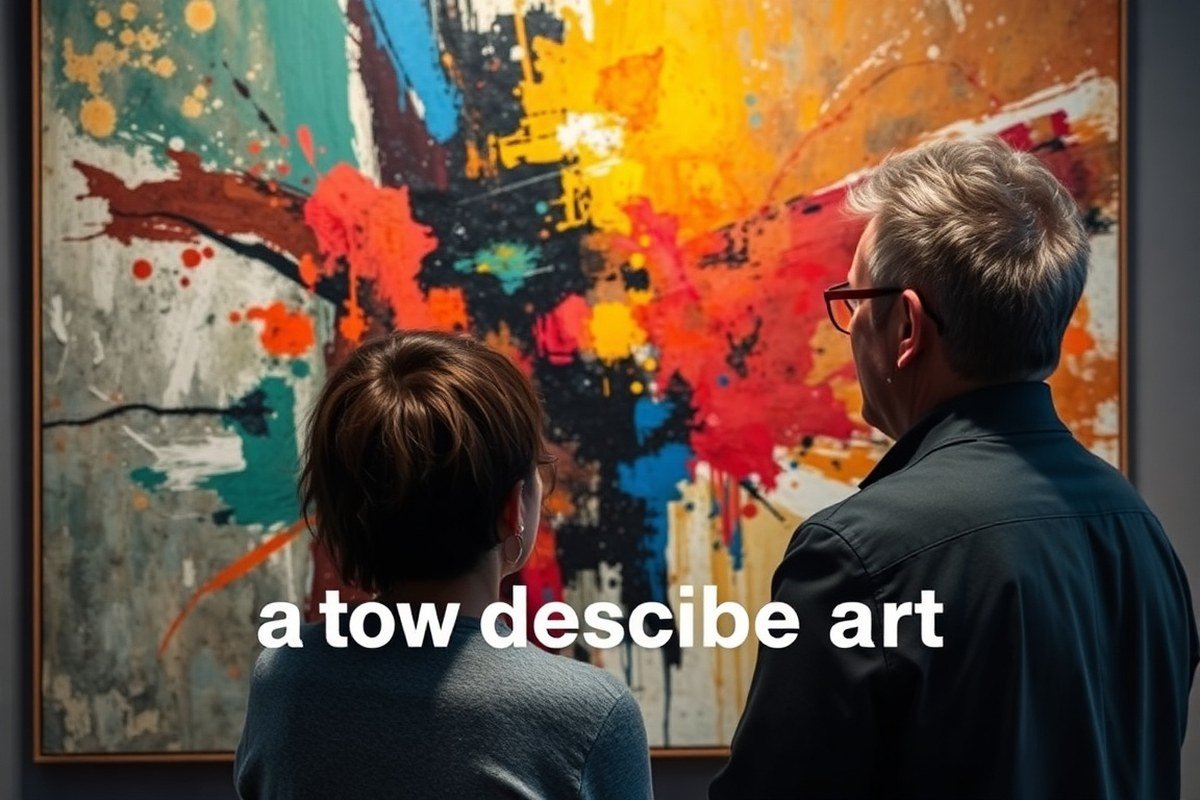
Describing the emotions that arise when you view a piece of art starts with identifying the feelings it stirs in you. These emotions might range from calmness, joy, and wonder to tension, sadness, or unease. You can then choose from evocative adjectives like soulful, serene, vibrant, melancholic, or unsettling to express those impressions clearly. For example, saying “The portrait feels soulful, capturing a profound sense of loneliness” connects your personal response to the artwork’s mood.
Linking your emotional reaction with objective details strengthens your description. Mention how the colors, brushstrokes, or composition contribute to your feelings. For instance, “The harsh, jagged lines and dark color palette evoke a sense of turmoil and conflict,” pairs your subjective experience with visible elements. This approach helps others understand why the artwork affects you deeply.
Using emotion words tailored to both positive and negative reactions equips you to communicate your response effectively. Words like hopeful, uplifting, peaceful describe positive feelings, while words such as chaotic, haunting, or somber suit negative impressions. To practice, you might write: “The vibrant reds and swirling patterns inspire energy and enthusiasm,” or “The muted tones and empty space generate a somber, reflective atmosphere.” Invent a simple template to describe your emotional experience: “This artwork makes me feel [emotion] because of the [visual feature].” For example: “This landscape makes me feel peaceful because of the soft light and harmonious colors.” Such clarity helps you connect personal impressions with the artwork’s physical properties, which deepens your analysis and presentation.
Describing Context: Artist’s Background, History, and Meaning
Including the artist’s background and historical context adds depth when describing art. Knowing who created the work, when and where it was made, and the art movement it belongs to helps you ground your description in fact. For example, stating that a painting was created by Claude Monet during the Impressionist period in late 19th-century France immediately provides a cultural and stylistic framework. This context explains the visual choices without needing guesswork.
To research context effectively, start with a checklist: identify the artist’s full name and lifespan, the creation date and location of the artwork, and the art style or movement it is associated with, such as Renaissance, Baroque, or Modernism. Next, find basic biographical details and any statements from the artist or critics about the work’s theme or purpose. Use reliable sources like museum websites, exhibition catalogues, or academic articles. Avoid assumptions based on incomplete information, since inaccurate context can mislead your description.
When explaining meaning, focus on the artist’s known intentions documented in sources rather than personal speculation. Highlight main themes or messages if clearly stated. For example, if an artist expressed a desire to capture the fleeting effects of light, mention that instead of guessing what the painting “really means.” Your description benefits from distinguishing objective facts and artist statements from personal interpretation. You can briefly note emotional responses as interpretation, but keep them separate from contextual description.
Use a simple script to integrate context: “This Oil painting by Mary Cassatt was painted in 1881 in the United States during the Impressionist movement. Cassatt focused on intimate domestic scenes, especially featuring women and children, aiming to capture everyday moments with soft light and color.” Such a clear, factual summary orients the reader while avoiding unsupported claims.
Practical Tips, Templates, and Common Mistakes to Avoid
Start your art description with a simple, clear structure: identify the artwork, describe what you see, comment on the style or technique, and share your interpretation. Using a checklist helps ensure you cover important points without losing focus. For example, your checklist can include the artist’s name, medium, dominant colors, composition, and mood. This approach keeps your description organized and accessible.
To help beginners, use these Sentence starters: “This artwork features…”, “The use of color suggests…”, “The composition creates a feeling of…”, and “One noticeable technique is…”. These templates guide your writing and avoid vague or overly complex descriptions.
- Avoid vague language like “nice” or “interesting”; specify what makes the piece appealing or unique.
- Don’t ignore the artwork’s details; missing key elements weakens your description.
- Refrain from overinterpreting without evidence; stay grounded in visual facts.
- Don’t rely solely on emotion, balance it with objective observation.
- Steer clear of “art jargon” that may confuse your audience.
Common mistakes include confusing abstract forms with random shapes or failing to mention the medium, which can change how the piece is viewed. Fix these by describing shapes as intentional elements and always noting materials used. When describing abstract or unfamiliar art, focus on emotions it evokes, colors, shapes, and any patterns you notice. Saying something like, “The irregular shapes create tension,” gives structure to your description without needing specific subject knowledge.
Your First Steps: A Quick-Start Plan to Describe Any Artwork
Use this action plan to begin practising how to describe art clearly and with confidence right away.
- Before You Start: Choose a single artwork that interests you. Spend 5 minutes just looking without speaking or writing; notice your initial thoughts and feelings.
- Day 1: Write a brief description focusing on visible elements like colour, shape, and texture. Check if someone unfamiliar with the artwork can picture it from your description.
- Day 2: Add emotional or personal responses to your description. See if including your feelings helps the reader connect more deeply with the piece.
- Day 3: Research the artist’s background and the artwork’s historical context. Include one or two key facts in your description to provide deeper meaning.
- Day 4: Review your full description and remove vague words or clichés. Ask a peer to read it and tell you if the artwork feels clearer to them.
- Week 1: Describe a new artwork using the full approach: clear visual details, emotional input, and context. Notice how your ability to communicate about art improves.
- After 2 Weeks: Practice describing art in different settings, class, presentations, or casual conversations. Track when your descriptions generate interest or questions about the artwork.
Frequently Asked Questions
How Can I Describe Abstract Art Effectively?
Focus on the shapes, colors, and emotions the abstract art evokes. Use clear language to express your personal response while noting any visual elements that stand out.
What Words Help Describe Texture in Artwork?
Use simple terms like rough, smooth, bumpy, or soft. These words help convey how the surface of the artwork looks or feels, making your description more vivid.
How Do I Avoid Vague Descriptions When Talking About Art?
Be specific about the visual elements and your personal reactions. Instead of saying “nice colors,” name the colors and explain why they appeal to you or affect the mood.
Is It Necessary to Know the Artist’s Biography to Describe Art?
Knowing the artist’s background adds depth to your description but isn’t always essential. Focus on what you see and feel, then add context if you have reliable information.
How Should I Describe the Mood of an Artwork?
Describe the emotions the artwork evokes and the atmosphere created by its colors, lines, and subject. Connect these feelings back to your personal experience to make the mood clear.
Key Points to Remember
Describing art effectively opens doors to a richer understanding and appreciation. Strengthen this skill by regularly observing and discussing artworks with detail and thoughtfulness. Start today by describing a piece you see in your home or local gallery, focus on what you see and feel, then share it with someone else to spark meaningful conversation.